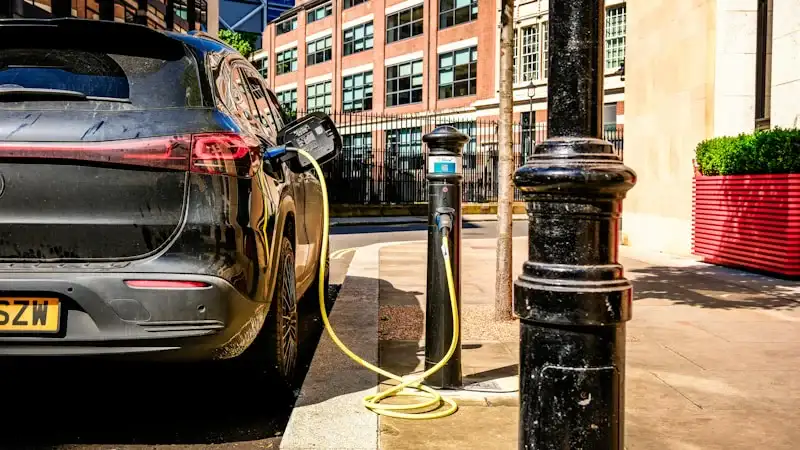
Electric vehicles are everywhere in Northern Michigan these days — in driveways downtown, in the parking lots up on Old Mission, and out on the wineries' scenic loops. And nearly every EV owner reaches the same conclusion within a few weeks: charging at home is the single best upgrade you can make to living with an electric car.
Public chargers are handy on a road trip, but for everyday driving, nothing beats plugging in at home and waking up to a full battery. The key is having the right charger installed the right way. In this guide, Matt Grace and the team at Grace Electric break down Level 1 versus Level 2 charging, what a home install involves, and the local details Traverse City homeowners should keep in mind.
Level 1 vs. Level 2 Charging
Every EV comes with a basic Level 1 cord that plugs into a standard household outlet. It works — slowly. For most drivers, a dedicated Level 2 charger is the difference between a car that's ready every morning and one that's always playing catch-up.
- Level 1 (120V). Uses a standard outlet and adds only about 3–5 miles of range per hour — fine for very light driving, frustrating for everyone else.
- Level 2 (240V). Runs on a dedicated 240-volt circuit (like a dryer or range) and adds roughly 25–40 miles of range per hour — a full overnight charge for nearly any EV.
For the vast majority of homeowners, Level 2 is the clear winner. It fully charges most vehicles overnight and keeps up easily even with long daily commutes or a two-EV household.
What a Home EV Charger Installation Involves
Installing a Level 2 charger is more than mounting a box on the wall. Done correctly, it's a dedicated electrical circuit sized and protected for the load. A typical install includes:
- A dedicated 240V circuit — usually 40 to 60 amps — run from your panel to the charging location.
- A hardwired charger or a NEMA 14-50 outlet, depending on your charger and preference.
- Proper breaker and wire sizing to handle continuous load safely and meet code.
- Surge protection to guard your investment against spikes.
- Neat, secure mounting in the garage or on an exterior wall, with cable management.
Does Your Electrical Panel Have Room?
This is the question that catches many homeowners by surprise. A Level 2 charger is a significant new load, and older panels — common in Traverse City's established neighborhoods and cottages — may not have the spare capacity or open breaker space for it. During our visit, we'll check:
- Your panel's total capacity and current load
- Whether there's room for a new dedicated circuit
- The distance and routing from the panel to your parking spot
- Whether a panel upgrade is needed first to support the charger
If your panel does need more capacity, we can handle the upgrade and the charger together, so it's one clean, coordinated project.
What About Cost and Rebates?
The total cost of a home EV charger install depends on a few factors, and an on-site estimate is the only way to get an accurate number. The main variables are:
- Distance from the panel to the charging location — longer runs need more wire and labor.
- Panel capacity — whether an upgrade is required.
- Charger type — hardwired unit versus outlet, and any smart features.
- Routing complexity — finished walls, exterior runs, or a detached garage.
It's also worth asking about utility rebates and manufacturer incentives, which can offset part of the cost. Many providers offer programs for home charging, and some include lower overnight electricity rates that make charging at home even more economical.
Buying a new EV soon? Schedule your charger install to be ready the day your car arrives. There's nothing worse than driving home in a new electric vehicle with nowhere to plug it in.
Choosing the Right Charger for Your Home
Not all Level 2 chargers are the same, and the best choice depends on your vehicle, your habits, and your home. A few things worth considering:
- Amperage. Higher-amp chargers (up to 48 amps) charge faster, but your car and your panel both need to support that rate — we'll match them correctly.
- Hardwired vs. plug-in. Hardwired units are clean and permanent; a NEMA 14-50 outlet lets you unplug and take a portable charger with you.
- Cable length. A longer cable gives you flexibility in where you park.
- Indoor vs. outdoor. If your charger will live outside, it needs to be rated for our Northern Michigan weather.
- Future-proofing. Sizing the circuit a little larger now can save money if you upgrade vehicles later.
Smart Chargers and Handy Features
Many of today's chargers offer smart features that make home charging even better, especially when paired with a lower overnight electricity rate:
- Scheduled charging to take advantage of off-peak rates automatically.
- App monitoring so you can track charging status and energy use from your phone.
- Wi-Fi connectivity for software updates and usage reports.
- Load management that balances the charger with the rest of your home's demand — sometimes avoiding the need for a panel upgrade.
Why Professional Installation Matters
An EV charger draws high current for hours at a time, every night. That makes correct, code- compliant installation essential — not a DIY weekend project. A licensed electrician ensures:
- The circuit is sized correctly for continuous load
- The work is permitted and inspected
- Connections are safe and built to last
- Your charger and vehicle warranty requirements are met
Frequently Asked Questions
How long does installation take?
Most straightforward Level 2 installs are completed in a few hours. If a panel upgrade or a long wire run is involved, it may take longer — we'll give you a clear timeline with your estimate.
Can you install a charger in a detached garage?
Absolutely. It takes a bit more planning to run power to a detached structure, but it's a common job. We'll assess the best route and make sure the circuit is sized and protected correctly.
Which EV brands can you support?
All of them. Whether you drive a Tesla, Ford, Chevy, Rivian, Hyundai, or anything else, we install chargers compatible with your vehicle — including universal J1772 units and Tesla connectors.
Why Homeowners Trust Grace Electric
Grace Electric is a family-owned, licensed, and insured electrical contractor serving Traverse City and the surrounding counties. We install Level 2 chargers for Tesla, J1772, and every EV make, and we handle the whole project — including any panel work — from start to finish. Homeowners choose us because we're:
- Fully licensed, bonded, and insured
- Experienced with all major EV charger brands and vehicles
- Committed to clean, code-compliant, permitted work
- Backed by hundreds of five-star reviews from your neighbors